Clear, plain-language positions on the issues that affect working people, families, and communities across NJ-03.
A note on this page
These are my positions, not a party script. They will continue to evolve as I listen across NJ-03, study the evidence, and work through the details. When I disagree with an organization or political group, I will say so.
Affordability and the Cost of Living
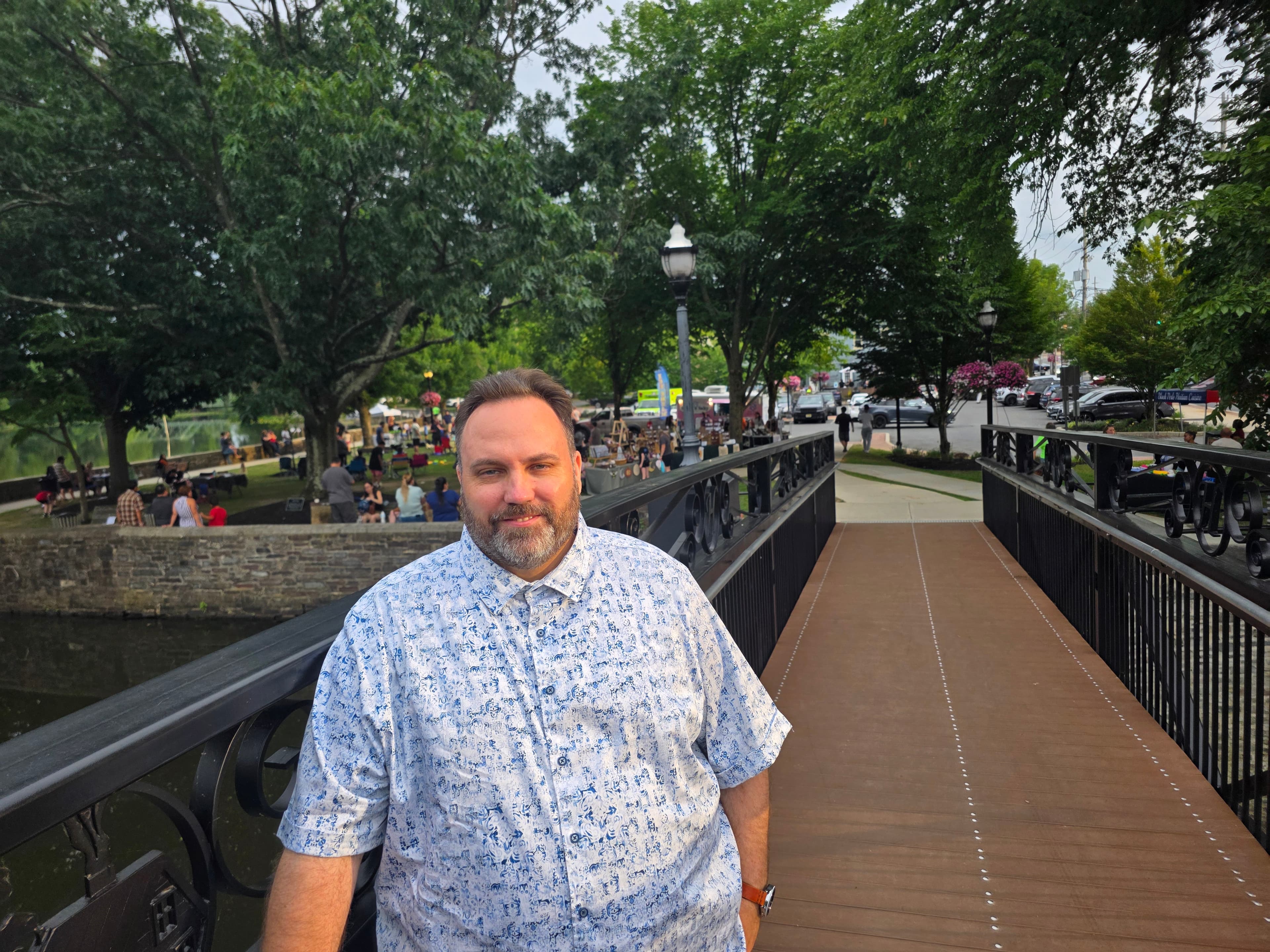
Out in the community at Hightstown Fun Fridays, 2026.
The problem
Families in NJ-03 are getting squeezed—groceries, utilities, childcare, and insurance costs keep rising while wages and opportunity don’t always keep pace.
Too often, Washington talks about the economy like it’s a stock ticker. Most people experience it as monthly bills and unexpected emergencies.
My approach
Focus on policies that lower everyday costs without gimmicks—competition, transparency, and enforcement where markets are failing people.
Support targeted tax relief for working families and small businesses, paired with responsible budgeting and oversight of waste.
What I’m working on
A practical affordability agenda tailored to NJ-03: what’s driving costs locally, and what federal levers actually help.
Clear positions on stock trading/ethics rules so voters can trust decisions aren’t influenced by personal gain.
Labor, Unions, and Workers’ Rights
Ryan Michael Kelly for Congress campaign literature, union-printed in 2026.
The problem
Too many people work hard and still lack a living wage, predictable benefits, safe working conditions, or a meaningful voice in decisions that affect their jobs.
Workers should not have to face retaliation or political barriers simply because they want to organize collectively.
My approach
I support the right of workers to organize and bargain collectively. Elected officials should stand with working people not only when asking for endorsements, but when workers are organizing and fighting for better wages, benefits, and working conditions.
I oppose so-called Right to Work laws and support stronger federal protections for organizing, a living wage, universal paid parental leave, and policies modeled on the PRO Act.
My campaign also tries to put those values into practice. We choose union printing for campaign literature whenever practicable, and our current campaign literature is union-printed and carries the union bug.
What I’m working on
Strengthening federal collective-bargaining and organizing protections
Raising wages and advancing a living wage
Opposing Right to Work laws
Universal paid family and parental leave
Protecting workers from retaliation for organizing
Creating good-paying union jobs through infrastructure, clean-energy, and public-service investment
Universal, Single-Payer Healthcare
The problem
No one should have to decide whether they can afford to see a doctor, fill a prescription, seek mental-health care, or have a baby.
The American healthcare system is fragmented, expensive, and burdened by private insurance middlemen whose financial incentives can conflict with what patients and providers actually need.
My approach
I support universal, single-payer healthcare. Healthcare should be treated as a public good and a basic guarantee, not something that depends on your employer, income, age, or ability to navigate an insurance bureaucracy.
Universal coverage should include preventive and routine care, emergency care, mental healthcare, prescriptions, reproductive healthcare, prenatal and postnatal care, fertility care, and medically necessary care for every person.
My goal is straightforward: every American should have healthcare at least as good as the healthcare members of Congress provide for themselves.
What I’m working on
A practical transition to universal single-payer coverage
Reducing or eliminating unnecessary private-insurance middlemen
Protecting reproductive healthcare, contraception, fertility care, and medication abortion
Expanding mental-health, primary-care, and preventive services
Ensuring healthcare access regardless of income, immigration status, disability, or gender identity
Housing: Affordability, Public Housing, and Tenant Stability
The problem
Housing is a basic need, yet rents and home prices have moved beyond what many working people can reasonably afford.
We do not have enough genuinely affordable housing, and homelessness cannot be solved by simply moving people from one place to another.
My approach
We need substantially more affordable housing, including public and social housing, while making sure new development is supported by appropriate infrastructure and thoughtful planning.
I support broadly applicable rent stabilization that permits reasonable increases tied to legitimate costs while protecting tenants from excessive increases.
I support Housing First approaches and supportive services. Clearing encampments without a safe and realistic housing alternative does not solve homelessness, and hostile architecture simply makes life harder for people who already have nowhere to go.
What I’m working on
Building and fully funding more affordable, public, and social housing
Using federal property, financing, and incentives to expand affordable housing
Rent stabilization tied to reasonable and transparent cost measures
Housing First and supportive services for people experiencing homelessness
Discouraging hostile architecture and policies that criminalize homelessness
Education, Workforce Readiness, and Student Loan Relief
Teaching, learning, and listening are central to my work.
The problem
Education is supposed to expand opportunity, but for too many families it has become a long-term financial burden that delays homeownership, family formation, and economic stability.
Tuition has risen faster than wages, while students are asked to take on large, long-term debt to access public and nonprofit education that should be broadly affordable.
At the same time, federal priorities have too often placed enormous resources into areas that most Americans never meaningfully consented to, while leaving students and families to shoulder rising costs on their own.
My approach
I believe education is a public good. Public colleges, universities, and nonprofit institutions should be affordable, predictable in cost, and not require decades of debt to access.
Student loan forgiveness—especially for public servants, educators, healthcare workers, and nonprofit employees—is not a handout. It is a recognition of service and a practical investment in communities.
Right now, students carry nearly all the financial risk—even when programs don’t deliver, circumstances change, or life intervenes. I believe risk should be shared more fairly between students, institutions, and the public.
When students leave school without a degree, or graduate into a labor market that doesn’t support repayment, the answer shouldn’t be lifelong debt and penalties. Education should open doors—not trap people financially when the system fails them.
Long term, we should reduce the need for loans altogether by controlling tuition growth, increasing public investment in education, and aligning costs with real economic outcomes.
What I’m working on
Defending and strengthening federal student loan forgiveness programs, including public service pathways
Exploring models that make public and nonprofit higher education low-cost or tuition-free
Policies that reduce reliance on debt rather than simply shifting repayment terms
Workforce-aligned education pathways that connect learning directly to stable employment
Climate, Energy, and Public Utilities
The problem
Climate change, pollution, rising utility costs, and rapidly growing energy demand affect both household budgets and the long-term health of our communities.
Working people should not be forced to choose between good jobs and clean air, clean water, affordable energy, and a livable climate.
My approach
I support a transition toward clean energy that creates good union jobs and protects workers whose existing jobs are affected through replacement employment, training, income support, and strong labor protections.
I support greater public ownership and democratic accountability of essential utilities, major investment in clean energy including offshore wind and responsible nuclear power, and moving public investment away from fossil fuels.
Corporations should bear the true costs they impose on communities rather than shifting those costs to residents and ratepayers.
What I’m working on
Expanding clean energy while protecting reliability and affordability
Public ownership and stronger public accountability of utilities
Good-paying union jobs in the clean-energy transition
Divesting public resources from fossil-fuel interests
A moratorium on new AI data centers while energy, water, ratepayer, and infrastructure impacts are properly addressed
Allowing future data-center development only where evidence shows it can operate sustainably without imposing unreasonable costs on communities
Public Safety and Criminal Justice Reform
The problem
We ask armed police officers and the criminal-justice system to handle too many problems that could be addressed more effectively through healthcare, treatment, social services, prevention, and community intervention.
Mass incarceration, wealth-based detention, unnecessary criminalization, and perpetual surveillance can destabilize people and communities without making anyone safer.
My approach
I support shifting resources toward social workers, mental-health professionals, violence prevention, treatment, and community services while focusing law enforcement resources on serious threats and violent crime.
I support ending cash bail and wealth-based pretrial detention. Limited temporary detention may still be necessary where individualized evidence shows a serious and immediate threat, subject to due process and regular review.
I support decriminalizing personal drug consumption, expanding harm reduction and treatment, decriminalizing consensual sex work, fair and timely parole, and reducing unnecessary incarceration.
Police and jails should not be our default mental-health system. Prevention, treatment, rehabilitation, and successful reentry should be central parts of public safety.
What I’m working on
Community-based violence prevention and non-police crisis response
Ending cash bail and wealth-based detention
Drug decriminalization, harm reduction, and treatment
Decriminalizing consensual sex work
Reducing unnecessary incarceration and opposing unnecessary prison expansion
Fair parole, reentry support, and alternatives to incarceration
Police accountability, de-escalation, transparency, and civil-rights protections
Second Amendment & Gun Safety
The problem
Gun violence, suicide, domestic violence, and firearm accidents cause real harm to families and communities. At the same time, millions of law-abiding Americans responsibly own firearms, and the Second Amendment is a constitutional right.
Too much of the gun debate treats those realities as mutually exclusive. I believe we can protect constitutional rights while pursuing practical, evidence-based measures that reduce violence and promote responsible firearm ownership.
My approach
I strongly support the Second Amendment and the right of law-abiding Americans to own firearms. I have been a firearm owner and a life member of the NRA, and I understand the importance many Americans place on responsible gun ownership.
I also support expanded background checks, secure firearm storage, community-based violence prevention, suicide prevention, and Extreme Risk Protection Orders with strong due-process protections.
I do not support a broad ban on commonly owned firearms, and I do not support reinstating the federal assault-weapons ban. I believe policy should focus on preventing dangerous people and dangerous situations from becoming tragedies while respecting the rights of responsible gun owners.
My 2026 Moms Demand Action Gun Sense Candidate distinction reflects my willingness to govern with gun safety in mind. It is not an endorsement by Moms Demand Action or Everytown for Gun Safety Action Fund.
What I’m working on
Expanded and effective background checks
Secure firearm storage and responsible ownership
Extreme Risk Protection Orders with strong due-process protections
Community-based violence intervention and prevention
Firearm suicide prevention, education, and research
Combating illegal gun trafficking and focusing enforcement on dangerous actors
Protecting the constitutional rights of law-abiding firearm owners
Civil Rights, Equality, and Personal Freedom
Full Circle Pride Parade, Haddon Township, 2026.
The problem
Civil rights mean little if people cannot actually exercise them. Discrimination and unequal access still affect housing, employment, education, healthcare, public services, and participation in civic life.
Women, LGBTQ+ people, people with disabilities, racial and ethnic minorities, and other communities continue to face legal, economic, and institutional barriers.
My approach
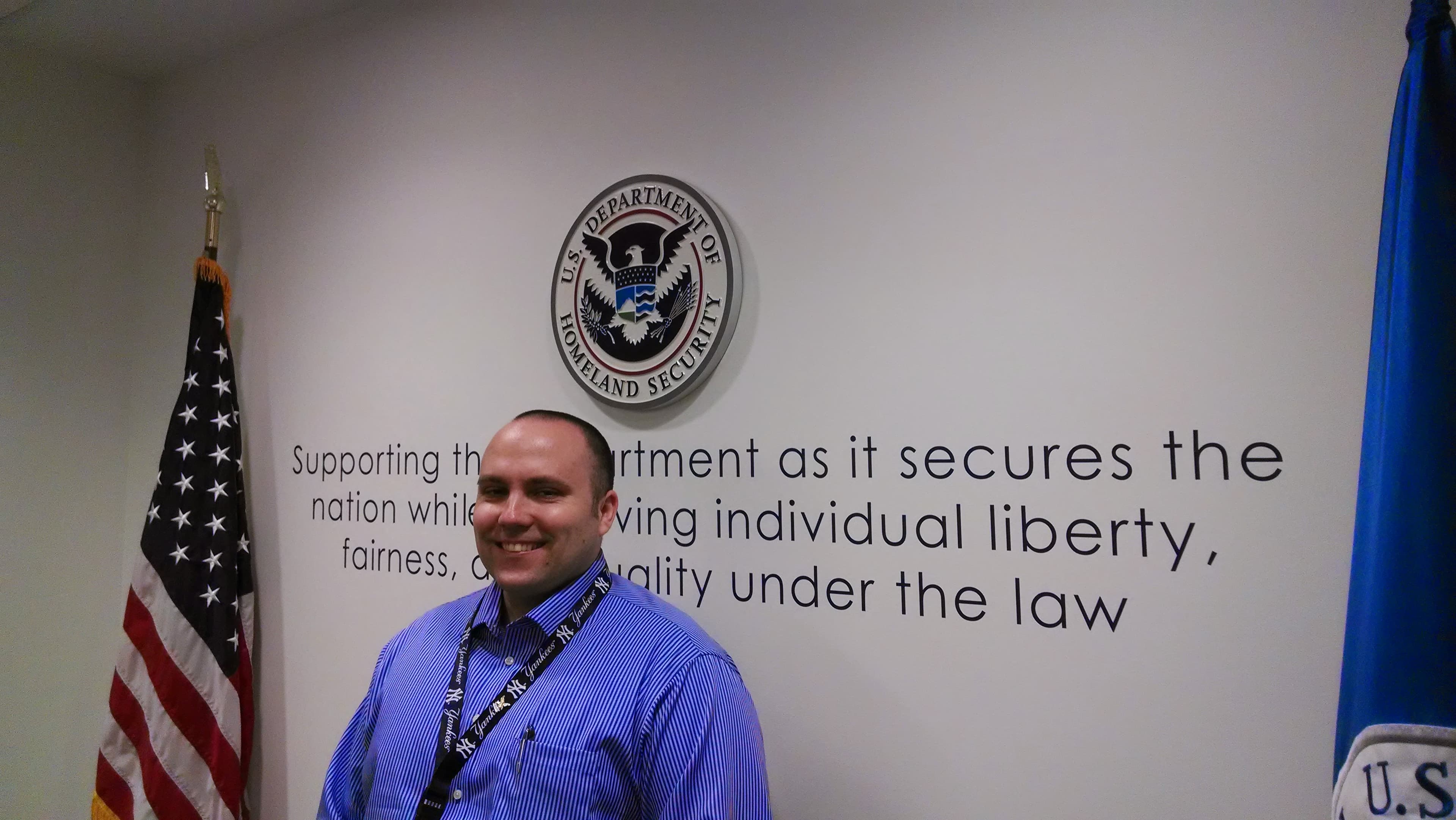
I spent more than a decade working in federal civil-rights and civil-liberties oversight. I support strong enforcement, independent oversight, meaningful complaint processes, and proactive examination of disparities in government programs.
I support strong federal protections for reproductive freedom, including abortion access, contraception, fertility care, medication abortion, maternal healthcare, and prenatal and postnatal care.
I support LGBTQ+ equality, including protections against discrimination in employment, housing, education, healthcare, and public services. Transgender people deserve the same freedom, dignity, healthcare, and equal protection as everyone else.
I support stronger ADA and Section 504 enforcement and reforms that allow people with disabilities to work, marry, raise families, receive healthcare, learn, and live independently without being penalized by outdated benefit rules.
What I’m working on
Strengthening federal civil-rights enforcement and independent oversight
Protecting reproductive freedom in federal law
Strong LGBTQ+ and transgender nondiscrimination protections
Strengthening ADA and Section 504 enforcement
Protecting parents with disabilities from discriminatory assumptions
Addressing racial disparities in public services, education, employment, and government programs
Religious Freedom, Conscience, and Separation of Church and State
The problem
Religious freedom can be threatened in more than one direction. Government can interfere with people’s ability to worship and practice their faith, but it can also undermine religious liberty by favoring certain traditions, deciding which beliefs are sufficiently legitimate, or using government power in ways that make people afraid to enter a house of worship.
Those concerns arise in civilian life and in the military. Service members should not have their faith reduced to an inaccurate government category, lose access to appropriate spiritual care because their tradition is administratively inconvenient, or be treated differently because their religion is unfamiliar or unpopular.
My approach
I support a strong separation of church and state because it protects religious liberty. Government should neither establish nor favor a religion, and every person should be free to practice their faith — or no faith — without unnecessary government interference.
My concern about religious liberty is not new. I have spoken with religious leaders over the years about military religious accommodation, chaplaincy, religious identification, and the government’s treatment of different faith traditions. Those conversations reinforced a principle I still hold: government should protect people’s ability to practice their religion, not decide which sincere faiths are sufficiently legitimate to count.
My own religious journey has crossed different traditions, and I am Catholic today, but religious liberty means very little if we defend it only for people who believe as we do. I will defend the freedom of people of every faith, people whose beliefs do not fit neatly into government categories, and people who practice no religion.
That principle should apply to military service as well. Service members should be able to accurately identify their religious preference, seek reasonable religious accommodations, receive appropriate spiritual support, and practice their faith consistent with legitimate military requirements — without government officials ranking religions according to theological legitimacy.
Houses of worship also deserve strong protection from routine government intrusion, immigration enforcement, and surveillance. Genuine emergencies and properly authorized investigations can present different circumstances, but churches, synagogues, mosques, temples, and other sacred spaces should not become ordinary enforcement or intelligence venues.
Religious liberty and equal treatment under the law are both fundamental. Protecting freedom of worship and conscience should go hand in hand with protecting people from discrimination and ensuring that civil rights and access to public life do not depend on another person’s religious beliefs.
What I’m working on
Protecting free exercise of religion and freedom of conscience for people of every faith and no faith
Maintaining a strong separation of church and state and opposing government establishment or favoritism toward religion
Ensuring military religious-preference systems respect service members’ own beliefs rather than arbitrarily determining which faiths count
Protecting access to chaplains, reasonable religious accommodation, and appropriate spiritual care for service members of minority and less-common faith traditions
Requiring transparency and congressional oversight when the Department of Defense changes religious-affiliation, chaplaincy, or accommodation policies
Restoring strong protections for houses of worship and genuinely sensitive locations from routine immigration enforcement
Establishing meaningful legal safeguards and oversight for government surveillance involving religious communities
Protecting religious organizations and individuals from discrimination while preserving civil rights and equal protection for everyone
Immigration, Civil Rights, and Due Process
The problem
Immigration enforcement has accumulated enormous executive power while congressional protections, independent oversight, and meaningful accountability have been weakened.
Whether someone is undocumented, seeking asylum, a refugee, protected by TPS, or navigating the immigration system as a military family member, government must respect due process, dignity, and constitutional rights.
My approach
I support abolishing ICE and fundamentally restructuring federal immigration enforcement around due process, civil rights, legitimate public-safety needs, and meaningful independent oversight.
I support sanctuary policies that prevent local police from automatically functioning as federal civil-immigration officers. People should be able to report crimes, serve as witnesses, and seek help without fearing that ordinary interaction with local government will become an immigration-enforcement action.
I would restore and strengthen DHS civil-rights and oversight offices and protect them by statute from political dismantling.
I support stronger statutory protections for asylum seekers, refugees, TPS recipients, immigrants, and military families so basic rights cannot simply disappear whenever administrations change.
What I’m working on
Abolishing ICE and designing a lawful, humane replacement structure
Restoring and strengthening DHS civil-rights and oversight functions
Protecting sanctuary policies and limiting local participation in federal civil-immigration enforcement
Greater transparency and investigation of detention conditions
Strong due-process protections and accountability for misconduct
Protecting asylum, refugee, TPS, and military-family pathways
Peace, War Powers, Palestine, and Human Rights
Ryan Michael Kelly, 2026.
The problem
The United States has spent enormous resources on wars and military interventions while Congress has repeatedly surrendered its constitutional responsibility over war powers.
U.S. foreign policy should not provide blank checks for governments or military actions that violate international law, cause widespread civilian suffering, or undermine long-term peace.
My approach
I am anti-war. Military force should be reserved for the actual defense of our country and people, and Congress must reclaim its constitutional authority over war.
I support a permanent ceasefire in Gaza, an end to U.S. military aid that enables violations of international and humanitarian law, and diplomatic, economic, and political pressure to end the occupation and protect Palestinian rights.
I support the use of peaceful Boycott, Divestment and Sanctions as protected political expression and oppose laws that punish people merely for participating in BDS.
I believe the Israeli government’s actions in Gaza constitute genocide. I also unequivocally oppose antisemitism and believe Jewish people must be protected from hatred, discrimination, threats, and violence. Criticism of a government and advocacy for Palestinian rights should not automatically be treated as hatred toward Jewish people.
Palestinians and Israelis both deserve to live in peace and security. U.S. policy should prioritize human rights, accountability, diplomacy, humanitarian assistance, and a lasting peace rather than occupation, collective punishment, displacement, or endless warfare.
What I’m working on
Reasserting congressional control over war powers
Ending unnecessary foreign military engagements and blank-check military aid
Supporting a permanent ceasefire and humanitarian relief in Gaza
Protecting peaceful BDS advocacy and political expression
Opposing antisemitism while protecting legitimate criticism of governments
Conditioning any future military assistance on compliance with international and humanitarian law
Redirecting unnecessary military spending toward healthcare, housing, education, infrastructure, and other human needs
Accountability, Ethics, and the Rule of Law
Public service starts with listening to the people you represent.
The problem
Public trust erodes when accountability appears selective or nonexistent.
When leaders or individual officials misuse authority, violate the law, or infringe civil rights without consequence, it undermines democracy itself.
A democracy cannot function if authority is treated as immunity.
My approach
The rule of law applies to everyone—elected officials, political appointees, and individual government employees alike.
Accountability must be lawful, evidence-based, and impartial. That means independent investigations, enforcement of civil-rights protections, and consequences through established legal process.
Holding individuals accountable for misconduct is not anti-government. It is pro-democracy. Lawful authority depends on public trust, and that trust is earned when power is exercised within constitutional bounds—and corrected when it is not.
When warranted by evidence and law, Congress should use constitutional remedies—including impeachment and removal—as safeguards, not partisan weapons.
What I’m working on
Strengthening independent oversight and investigations into misconduct at all levels of government
Enforcing civil-rights laws and due-process protections in federal enforcement activities
Supporting constitutional remedies — including discipline, prosecution, impeachment, or removal — when supported by evidence and law
Supporting term limits for the House and Senate through appropriate legal or constitutional reform
Exploring term limits or ethics reforms for federal judges while respecting constitutional requirements
Banning or strongly limiting stock trading by members of Congress and strengthening conflict-of-interest rules
Reducing the influence of big money in politics, including supporting constitutional and legislative reforms to address Citizens United, strengthen campaign-finance transparency, and give ordinary voters a stronger voice
Protecting whistleblowers and inspectors general who expose wrongdoing
Oversight, Accountability, and Spending Priorities
More than a decade of federal service informs my approach to oversight and accountability.
The problem
Washington approves enormous spending packages while public trust declines. Too often, the details are opaque, oversight is weak, and outcomes are unclear.
When Congress fails at oversight, people reasonably ask: who is this for—and why aren’t urgent needs at home getting the same seriousness?
My approach
I believe Congress should apply rigorous oversight to large federal expenditures—especially in defense and security—before approving billions of dollars.
Oversight means accountability, measurable outcomes, transparency, and consequences for waste or abuse. It also means being honest about tradeoffs and priorities.
This isn’t about turning inward. It’s about governing responsibly: meeting humanitarian obligations where we can, while also delivering for NJ-03 on affordability, healthcare, infrastructure, and resilience.
What I’m working on
A practical oversight framework: what questions I’ll ask before voting yes on major spending
Stronger ethics and transparency standards so voters can trust decisions aren’t influenced by personal gain
District-centered budgeting priorities: what NJ-03 needs most, and what federal actions actually help
Infrastructure, Resilience, and Preparedness
The problem
Infrastructure is not an abstract talking point—it’s commutes, storms, power reliability, and whether services hold up under stress.
Preparedness is cheaper than failure, but it’s often underfunded until after something goes wrong.
My approach
Support investments that improve reliability and resilience—transportation, utilities, broadband, and emergency preparedness.
Insist on accountability: projects should deliver measurable outcomes and be transparent to the public.
What I’m working on
A district-focused resilience lens: where federal resources can strengthen NJ-03 preparedness and recovery capacity.
Practical oversight goals: transparency on spending, timelines, and outcomes.
Independent Representation: You, the People
The problem
Too many people feel like parties, consultants, and donors are talking to each other while real communities are left waiting for answers.
Being Independent does not mean having no values. It means my loyalty does not automatically belong to a political party.
My approach
I spent years as a civil servant, and I approach elected office the same way: the public is the boss. My loyalty is to the people of NJ-03. I will listen first, study the evidence, and work with anyone when it helps the district.
I am not here for revenge politics. I am here to solve real problems: costs, healthcare, infrastructure, education, civil rights, and trust in government.
What I’m working on
Creating more ways for residents to share what keeps them up at night
Publishing clear priorities and plain-language policy drafts
Maintaining independence from party leadership, consultants, donors, and performative politics
Agree on some things? Disagree on others? That’s okay.
I don’t expect every voter to agree with me on every issue. What I do promise is to listen, explain where I stand, follow the evidence, and remain accountable to the people of NJ-03.
If something here matters to you — whether you agree, disagree, or think I’m missing something — I’d like to hear from you.